Sopron: Best wineries, wine tastings and wines
Top suppliers
More wineries


Best wine tastings
More wine tastingsBónis-Reitter wine tasting in the historic Pálos Cellar
Bónis-Reitter wine tasting with barrel-aged Sopron red wines
Bónis-Reitter wine tasting in the historic Pálos Cellar
Bónis-Reitter wine tasting with barrel-aged Sopron red wines
Recommended accommodation nearby
All accommodations
 Best choice
What Makes the Sopron Wine Region Special?
A Bit of History
It’s no exaggeration to say that Sopron and its surroundings have been inhabited since ancient times. Evidence of this is the earth fortress built around the 7th century BCE during the Iron Age. Later, during the Roman Empire, the city was named Scarbantia and sat at the crossroads of important trade routes, including the Amber Road. When the Hungarians arrived during the conquest, they found only the ruins of the Roman city and rebuilt the settlement, which was renamed Sopron in the 11th century after its local governor.
With such a rich history, it’s no surprise that viticulture has been a key activity here for thousands of years. The wine-loving Romans took advantage of the area’s natural features for winemaking, but research suggests that even the Celts before them cultivated grapes. While it’s unclear if the Huns or Avars continued these traditions, by the 13th century, there were thriving wineries in Sopron and its surrounding villages.
By the 15th century, wines from the Sopron region were known and enjoyed across Europe. The next major milestone occurred during the Napoleonic occupation of 1809. Napoleon’s soldiers, stationed in Sopron, demanded local wine to enjoy in the evenings, paying with blue-colored French francs. According to legend, this is how the famous Kékfrankos (Blaufränkisch) grape variety got its name.
The 20th century brought challenges for Sopron, as it did for many Hungarian wine regions. State nationalization, the introduction of new grape varieties, and the dismantling of family wineries led to a significant decline in wine quality. The situation only began to improve after the political transition, with two key milestones: in 1987, the International Vine and Wine Office awarded Sopron the title of "City of Wine," and in 2003, Sopron trademarked itself as the "Capital of Kékfrankos."
Natural Characteristics
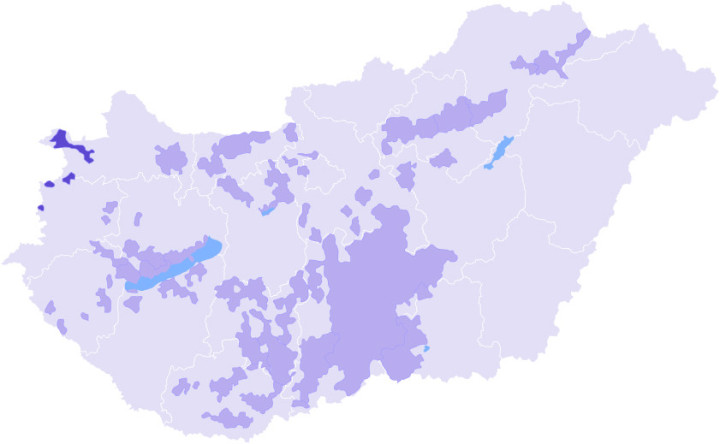
The Sopron wine region lies at the foot of the Alps, on the southern shore of Lake Fertő, near the Sopron Hills. It is considered a medium-sized wine region, covering approximately 4,300 hectares, though only 1,800 hectares are actively cultivated. The wine region is divided into two subzones: the Kőszeg subzone, which includes villages like Csepreg, Vaskeresztes, and Lukácsháza, and the Sopron subzone, which includes Fertőrákos, Kópháza, and Nagycenk.
The region's climate is strongly influenced by the nearby Alps and the large body of water of Lake Fertő. These factors make Sopron a cool-climate wine region, with mild winters and summers that are not overly hot. There is plenty of rainfall, as well as constant airflow.
The region's soil is ideal for viticulture, with hills and slopes rich in limestone, loess, and brown forest soil, all of which contribute to excellent grape-growing conditions.
Planted Grape Varieties
White Grape Varieties:
- Chardonnay
- Irsai Olivér
- Sauvignon Blanc
- Zenit
- Zöld Veltelini (Grüner Veltliner)
Red Grape Varieties:
- Cabernet Franc
- Cabernet Sauvignon
- Kékfrankos (Blaufränkisch)
- Merlot
- Pinot Noir
- Syrah
- Zweigelt
Additional Varieties:
- Blauburger
- Furmint
- Királyleányka
- Early Red Veltelini
- Pinot Blanc
- Tramini
- Turán
What Wineries Can You Find in the Region?
Experiences Await You
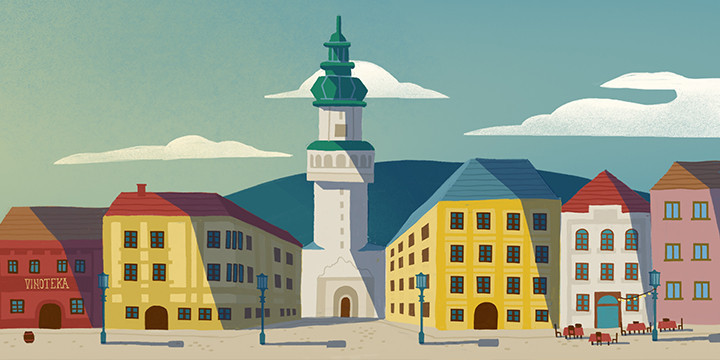
Sopron is a charming city filled with historic sights at every turn. Be sure to explore the old town, visit the Fire Tower, and see the Goat Church, built in 1280. If the weather allows, take a dip in Lake Fertő, and don’t miss one of Hungary’s largest music festivals, VOLT.
Notable Wineries
- Gangl Winery
- Jandl Winery
- Kampits Family Winery
- Lövér Winery
- Pfneiszl Winery
- Puklusvin Kft.
- Stefanich Winery
- Taschner Wine and Sparkling House
- Tóth Winery
- Töltl Winery
- Vincellér Estate
- Vinora Winery
- Weninger Winery
In the Sopron wine region, you’ll never run out of wine, experiences, or adventures. If you want to experience the atmosphere and flavors of this borderland wine region, book a wine-tasting program today!
Follow us
Follow us on Instagram and Facebook to stay up to date with the latest news and updates!
Newsletter
Subscribe and receive a HUF 1000 wine tasting coupon!